

-

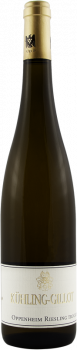
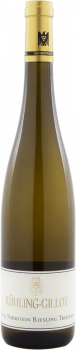
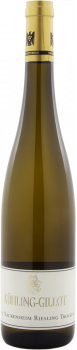
Kühling Gillot
Rheinhessen15.05₣
14.30₣/ud (-5%)
-
90
-
-
-
-
Showing 1 to 4 of 4 (1 Pages)
Buy Wine from Kühling Gillot
On the banks of the Rhine, where Rheinhessen ceases to be ‘gentle countryside’ and becomes hillside, wind and stone, Kühling Gillot is writing a story measured not in decades but in generations. The winery stems from a family tradition spanning more than two centuries and, for a long time, had a rare feature: it was run by women until Roland Gillot joined the family in 1970. Today, that heritage beats with a contemporary pulse: since 2006, Carolin Spanier-Gillot has run the estate alongside her husband, Hans Oliver Spanier, with a single-minded focus — unpretentious hospitality and wines that speak with a voice of their own.
The Rheinterrasse as a stage of precision
Kühling Gillot does not seek easy impact. It seeks identity. Its vineyards are spread across the famous “Rhine Terrace” in five villages—Oppenheim, Nierstein, Nackenheim, Bodenheim and Laubenheim—and this diversity of locations translates into a common language: Riesling with vigour, clarity and a mineral energy that seems to spring from the subsoil. The name QVINTERRA® itself sums up this idea: five origins, five soils, a single thread.
Spanning around 25 hectares, the mosaic of plots includes names familiar to any lover of German Riesling: Pettenthal, Hipping, Ölberg, as well as vineyards in Bodenheim and Oppenheim such as Burgweg, Kreuz and Sackträger. It is not a collection of labels: it is a map of microclimates and exposures that are vinified so that each place retains its own character.
The magic lies in the red rock and in time
.If there is one symbol that defines the vertigo of Kühling Gillot, it is Rothenberg. There, on a steep plot nicknamed “Kapellchen”, the vines cling to red slate so porous that the roots seem to carve their way through by “eating” the rock. And there is one detail that elevates the story to the realm of rarity: some Riesling vines were planted in the early 1930s, before regulations required grafting to combat phylloxera; that is why the wine is produced as ungrafted, having already become an icon of the estate.
But the secret lies not only in the soil: it is time. Nothing is forced here. Natural fermentation, extended ageing on lees and an idea repeated like a mantra: precision is born of patience. Some wines are released two or three years after the harvest, when the wine has refined its character and the terroir emerges above the primary fruit.
Biodynamics: “miteinander”
Since 2005, organic viticulture has been complemented by biodynamics, understood as a deep sense of connection: soil, plant, person and landscape. On their limestone and slate crus, Riesling and Spätburgunder are cultivated so that the wine’s journey from space to time becomes tangible in the glass. Thus, rather than a style, Kühling Gillot offers a coordinate: the moment when the Rhine, the slope and the red rock become a sharp, electric and surprisingly serene line.--
- ;
-

15.05₣
14.30₣/ud (-5%)
Parker90
- ;
-
-
25.51₣
Parker92
Buy Wine from Kühling Gillot
On the banks of the Rhine, where Rheinhessen ceases to be ‘gentle countryside’ and becomes hillside, wind and stone, Kühling Gillot is writing a story measured not in decades but in generations. The winery stems from a family tradition spanning more than two centuries and, for a long time, had a rare feature: it was run by women until Roland Gillot joined the family in 1970. Today, that heritage beats with a contemporary pulse: since 2006, Carolin Spanier-Gillot has run the estate alongside her husband, Hans Oliver Spanier, with a single-minded focus — unpretentious hospitality and wines that speak with a voice of their own.
The Rheinterrasse as a stage of precision
Kühling Gillot does not seek easy impact. It seeks identity. Its vineyards are spread across the famous “Rhine Terrace” in five villages—Oppenheim, Nierstein, Nackenheim, Bodenheim and Laubenheim—and this diversity of locations translates into a common language: Riesling with vigour, clarity and a mineral energy that seems to spring from the subsoil. The name QVINTERRA® itself sums up this idea: five origins, five soils, a single thread.
Spanning around 25 hectares, the mosaic of plots includes names familiar to any lover of German Riesling: Pettenthal, Hipping, Ölberg, as well as vineyards in Bodenheim and Oppenheim such as Burgweg, Kreuz and Sackträger. It is not a collection of labels: it is a map of microclimates and exposures that are vinified so that each place retains its own character.
The magic lies in the red rock and in time
.If there is one symbol that defines the vertigo of Kühling Gillot, it is Rothenberg. There, on a steep plot nicknamed “Kapellchen”, the vines cling to red slate so porous that the roots seem to carve their way through by “eating” the rock. And there is one detail that elevates the story to the realm of rarity: some Riesling vines were planted in the early 1930s, before regulations required grafting to combat phylloxera; that is why the wine is produced as ungrafted, having already become an icon of the estate.
But the secret lies not only in the soil: it is time. Nothing is forced here. Natural fermentation, extended ageing on lees and an idea repeated like a mantra: precision is born of patience. Some wines are released two or three years after the harvest, when the wine has refined its character and the terroir emerges above the primary fruit.
Biodynamics: “miteinander”
Since 2005, organic viticulture has been complemented by biodynamics, understood as a deep sense of connection: soil, plant, person and landscape. On their limestone and slate crus, Riesling and Spätburgunder are cultivated so that the wine’s journey from space to time becomes tangible in the glass. Thus, rather than a style, Kühling Gillot offers a coordinate: the moment when the Rhine, the slope and the red rock become a sharp, electric and surprisingly serene line.--